Abundant Michael: Getting Real

Wednesday Gathering in Rockville - Asking, Desiring, Needing 3/31/10

This Wednesday Sandbox gathering we learn how to ask for what we want and explore our desires and needs. Many of us are afraid to ask for what we want in a relationship for fear or either not getting it or of having the other person give it to them out of obligation. Asking for what you want is an act of trust. You are taking a step into the unknown – not knowing how the other person will respond. We are giving up control because when we chose to relate we don't know what the answer will be. And in my experience it is better to practice lots of asking and getting some No than to avoid asking and then making asking a request mean more than it does.

This week we will practicing saying what we want, what we don't want and from who. And renegotiating these requests when we notice that our feelings have changed. Oh my goodness what if others get angry or upset by our requests? We will work with that energy too! We will work with some of the skills from Susan Campbell's book Getting Real.

[Some text from copied from http://www.susancampbell.com/datinghelp/10truthskills.html ]

The workshop begins after dinner at 8pm.  I invite you to join us, though as always what ever choice you make you will be honored in.

Assertiveness and Authenticity tips from Oprah Mag

Here are some great Assertiveness and Authenticity tips from Oprah Mag.

Pre-fighting in a relationship to prevent the big fight

Interesting article by relationship author Sharyn Wolf on fighting in a relationship suggesting that if you are stuck in a pattern of "always" fighting with your partner in a particular situation then get the fight out of the way beforehand. I would add the idea of doing the pre-fight in gibblerish too to avoid hitting more triggers on the way.

http://www.amazon.com/gp/blog/post/PLNKFX8HKN6Y0CTQ

Levels of emotion

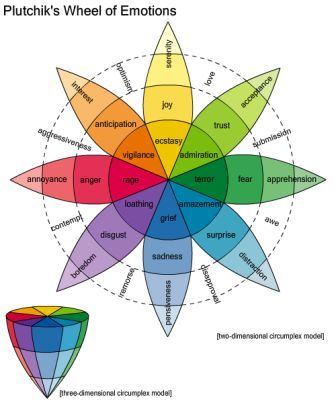
At my honesty salon last night we came up with the concept of levels of anger and how languaging affects how we feel. We had these levels:

  • homicidal
  • rage
  • anger
  • irritation
  • peeved

There seems to be a big gap in levels between irritation and anger - any suggestions on what fits in there?

I wrote out similar levels for other emotions fear, sadness, happy, apathy, love and put them in a circle with levels from the center. Has anyone seen anything like this elsewhere?

using a partner instead of empty chair for hot seat work

Usually at group when someone has an issue to work with someone who is not present (eg their mother) on I ask for a volunteer to role play the other person so that the first person has someone to express their feelings towards. The volunteer doesn't have to say anything - just sit there, make eye contact and listen.

Last night a new group member said he thought this practice was unhealth for the receiver. Any thoughts on this?

What I came up with at the time is that when I receive for someone else that I notice that their emotions no matter how hot are on their site of the fence and that if I react emotionally it is due to my triggers. It has also helped me get over my fear of being with anger from others because I know if I breath and stay with them it will pass.

On the giver side I think it helps them really imagine that they are talking with their mother or who ever they are role playing. Of course the usual idea is that after group they will go to the real person and express themselves too!

Expressing difficult emotions

How are you at expressing difficult emotions such as anger, sadness and fear with your partners or friends? And what about listening to others
express their strong emotions? How can we stay present to either other
in this process. Here are some questions on this:

1. Do you agree or disagree: It's never okay to feel angry!

2. Do you agree or disagree: If you feel sad, there is something wrong with you!

3. Do you ever have big mood swings? Describe what they're like.

4. Have you ever been confused about your feelings -like you knew you were feeling a strong emotion, but you didn't know what?

5. Have you ever said you were feeling one thing when, really, you were feeling something else?

6. Do you think it's important to understand what it is you are feeling? Why? What can happen if you don't?

7. Do you think there's something wrong with you if you don't always feel wonderful? Is it okay to sometimes feel blue? Why, or why not?

8. Are some emotions more difficult to express than others? Which are they? Why are they hard to express?

More questions at:
http://www.goodcharacter.com/BCBC/Emotions.html

Asserting what you want and don’t want

Asserting what you want and don’t want

Many of us are afraid to ask for what we want in a relationship for fear or either not getting it or of having the other person give it to them out of obligation. Asking for what you want is an act of trust. You are taking a step into the unknown – not knowing how the other person will respond.

Here are 10 tips for asserting your wants
http://amikaplan.net/lists/top10.html

Taking back projections

Usually you are projecting parts of yourself (both the so-called positive and the so-called negative parts) which you have not seen, which are unconscious, and for which you have not yet taken responsibility. This is particularly true when you are reactive to what you see outside of yourself. By "reactive," we mean you have an unusual amount of energy attached to the particularly perception or that it has a "charge" for you. The more energy you have on something, the more you can be sure that what has touched you from the outside concerns what is happening inside yourself. I once thought Rhea was very insecure during one of our seminars, and I criticized her for it. When she hesitated in her response to a question, I thought she didn't trust her answer [which convinced me I was right]. Months later, I discovered the insecurity I had perceived as hers was actually my own.

What we are projecting onto the world around us is our own unconscious material...more  at http://www.terrylarimore.com/Projections.html

Silence in conversation

Are you friends with Silence? Or do you put her away like a person you dislike or are slightly afraid of? When
she comes to visit you and a group of friends do you let her in and greet her or do you make chatter to fill the void. Silence brings the gift of not knowing, of the void. Silence can connect us with spirit.

Silence Quiz (page 182 of Getting Real) Rate yourself: 1= not true, 5 = always true
1. I often finish people's sentences for them (or at least I feel like doing it)
2. I find it frustrating when someone takes a long time to make his point.
3. If someone asks me a questions, I usually answer it right away, without much reflection.
4. If I ask someone a questions, I like her to answer it right away and not leave me hanging.
5. I sometimes ask a question and then answer it myself without giving the other a chance to reply.
6. I find it hard to tolerate ambiguity, uncertainty or being in limbo.
7. When I am around the house alone, I often keep radio, television or music playing in the background.
8 I like to keep busy (or, even if I don't think I like it, I usually am busy).

Ideas on bringing more quiet time into our lives at:
http://www.lightworks.com/MonthlyAspectarian/2003/December/feature4.htm

This week we will practice Silence in conversation. See Getting Real Chapter 11, page 179+

No more "shoulds"!

Doing "shoulds" and "ought tos" is energy draining. When I have a "should" I ask myself if I want to do it and what will happen if I don't. Then I rephrase that I want to do it or chose not to do it. I find it really helps me to say out loud to others that I want to do X rather than I should do X or I must do X.

For example instead of "I should do my taxes" I say "I want to get my taxes completed today so I can enjoy the rest of my week and so I avoid the consequence of being stressed doing them at the last minute."

Is changing your mind honest?

Is it more honest to keep a promise or to tell someone that you have changed your mind? This article shines some light on this.

"One evening while having dinner with friends, I began complaining about something I had agreed to do but that I no longer thought was the best decision for me. In the name of "keeping my word," though, I felt I had to trudge through it. Suzanne looked at me and said something that honestly no one had ever told me: "Girl, you know you have the right to change your mind."

"I went silent. As the words reverberated through me, I slowly said the phrase to myself over and over, trying to embrace what it would feel like to actually accept that principle as part of my conscious living.

"Before then, I hadn’t thought of changing my mind as even possible. What about honor, commitment, staying the course?

More at:
http://www.donshewey.com/2001_zine/changing_your_mind.html

In Getting Real we learn how to Revise an earlier statement. (Getting Real Chapter 8, page 139)

Saying No to get what you want easier

It was great to see so many Sandboxers at Beltane! Especially to see David H wizing around in his electric chair while Gail tried on various sexy high heels. :-) We also went deep into boundaries at the Sandbox Explorations workshop at Beltane - practicing saying No, asking for what we want, how to clarify requests and ways to ask "difficult" questions about sexuality. I think that the attendees were more connected at the end of the workshop and more empowered too! I want to bring that energy to the gathering this week. At 8pm after dinner we will hold a short practice of saying No and asking for what we want. I invite you to join us, though as always what ever choice you make you will be honored in.

Getting Real - Practicing Honesty in Relationships at First Class in DC

I am teaching a class "Getting Real - Practicing Honesty in Relationships" at First Class in DC. BTW First Class has a lot of interesting personal growth and adult education classes in evenings and weekends. Check it out!

You can learn skills that make honest communication safer and more fun. Most people are afraid to be totally honest due to the fear of damaging the relationship, creating a hassle, or hurting someone's feelings. But when you learn to put your attention on your own "here-now" experience rather than worrying about the outcome, you discover the real source of personal power and self-trust. You will participate in fun exercises that include playing an honesty game. You will explore: practices that support living in the here-now experience, the difference between your senses and your mind, how to express anger and sadness without trying to control the other person, and how you can transparently label your intent.

"Presence is what makes you radiantly alive, confident and attractive. The key to presence is honesty."

Giving and asking for feedback

Giving feedback is the act of verbally letting the other know how his actions affected you. Being open to receiving feedback means you are curious about and willing to hear how your actions affect other people. Most people don't get very much valid feedback in their daily lives, and they long for it.

Quiz (1=usually not true, 5= mostly true of me)

1. People rarely give me feedback about how my behavior affects them.

2. I do not ask people for feedback about how my behavior affects them.

3. If someone does give me feedback and I 'm unclear about what they mean, I wouldn't ask them to be more specific.

4. I do not offer feedback to others.

5. I have never really benefited from feedback.

6. If I get negative feedback, I go into a self-critical, self-doubting mood that can last all day or longer

7. If I get negative feedback, I usually just think "That's their problem".

The lower your score the better you are at welcoming feedback. See Getting Real page 94 for detailed scoreing.

Noticing your intent

Do you communicate to relate or to control? When your intent is to relate, you are most interested in revealing your true feelings, learning how the other feels, and connecting heart-to-heart. When your intent is to control, you are most interested in getting things to turn out a certain way - avoiding conflict, getting the person to like you, being seen as knowledgeable or helpful, etc.

Quiz (1 = usually not true, 5 = mostly true)

1. If another person and I disagree on how something should be done, I'm usually right

2. I get very uncomfortable when I don't know what's expected of me.

3. I'm almost always in the teacher role as opposed to learner role.

4. I hate feeling awkward and unsure of myself, and I avoid situations that make me feel this way.

5. If someone gives me negative feedback about something I have done I'm not likely to tell this person how the feedback affects me

6. If I'm upset by the behavior of someone close to me, I'm not like to disclose this.

From Getting Real book page 69. See that page for how to score the quiz

Sharing mixed emotions

Sometimes we want to tell someone the truth but at the same time we are concerned about their feelings. A desire to clear the air might be accompanied by a fear of being misunderstood. Or I might both appreciate you cooking dinner when I asked you not to and be irrated that you did it too. Or  I might love you and be angry at your when you slammed the door.

When sharing mixed emotions I recommend that you use "and" between them rather than "but". A "but" tends to negate the part that come before it. Try saying these two version out loud:

"I love you and I resent you for being late"
to
"I love you but I resent you for being late"
for me the second version with "but" I don't feel the person loves me.

Quiz (from Getting Real Chapter 10 page 170)
Score 5 for general true and 1 for generally not true
1. I believe it is always better to have one clear feeling than two
2. I try to avoid feeling confused.
3. I get impatient with people who say one feeling and then immediately say another.
4. It would bother me if people thought me uncertain or unsure of myself
5. If I had to reprimand or discipline someone that I loved I would keep a stiff upper lip and avoid showing my softer, caring feelings

See the book for how to score the quiz.

How do you relate Quiz

Do you relate openly or do you tend to use “self-protective control patterns”? Take this 12 question quiz to get some clues!

1. After a first or second date, if my date asks, “Do you want to get together again soon?” and I do not want to see this person again, I would probably say “Yes,” and then call later to cancel.

Continued (and rate your answers) at:
http://www.susancampbell.com/datinghelp/quiz.html

Sandbox Gratitude Circle

This week 2/21 the Wednesday gathering is at my house in Rockville. I have just been watching the Oprah
shows on The Secret (http://www.secret.tv) and it reminded me of all the things that I am grateful for.
So this week I will hold a gratitude circle at 6:30pm where we can all express what we are grateful for.

Here are some things I am grateful for in this moment.
I am grateful for all the different spiritual communities that I am in and all the people that are in them. I am
grateful for everyone who came to play with desert on me the other week. I am grateful for all the people who
have traveled to my house for Wednesday gatherings. I am grateful for the number of
posts about presence and honesty last week and for the insights that I got while reading other people's
posts. I am grateful for Sarah explaining what a frame for a word's definition is. I am grateful for David Alde
buying the shopping and cooking the Wednesday dinner. I am grateful to Alan for installing a new light
in the Sandbox room. I am grateful for the depth and number of hugs that David Hollies has given me. I am
grateful for Jeremiah and Jolie giving such wonderful healing at their workshop Saturday - I released a lot
of pain and anger.

Getting Real in Sex and Relationships 2/24/07 7-9pm Rockville MD

"Presence is what makes you radiantly alive, confident, and attractive.
   The key to presence is honesty."

Being present and honest has helped me greatly in my relating! The key to good sex and relationships is honest communication - but how often do we get to learn how to communicate honesty in a safe environment? -  but how often does it happen and
why is it so hard? Most people are afraid to be totally honest. They fear damaging relationships by creating conflict, or hurting another's feelings. But, learning to attend to your own here-now experience rather than worrying about the outcome, uncovers the real source of personal power and self-trust. This workshop will help by experiencing out the difference between thinking,
feeling, and noticing You will practice speaking honestly and noticing how language  affects the way we communicate. Engaging games & exercises make this workshop fun too! Whether your interest in communication is for polyamory, S/M, coming out or other relationship reasons this workshop will help.

Cost: Free (donations accepted to cover snacks and drink)
Date Sat 2/24/07 7pm - 9pm

Note this is a CPN event that is open to the pubic

Dare to Be Different

Sometimes we want everyone to like us and go into control
patterns to try to achieve this instead of being real with others.
This article talks about this and gives some tips on being your
true self.

"When I was a little girl, about nine years old, living in Bay
Village, Ohio, I came home from a birthday party and burst into
tears. “What’s wrong?” my mother asked.

“Suzy Wright doesn’t like me!” I said.

“How do you know?”

“Because everyone told me she doesn’t,” I sobbed.

Continued at http://www.realsimple.com/realsimple/content/0,21770,1580456-1,00.html

Asking for what you want

Many of us are afraid to ask for what we want in a relationship for fear or either not getting it or of having the other person give it to them out of obligation. Asking for what you want is an act of trust. You are taking a step into the unknown – not knowing how the other person will respond. We are giving up control because when we chose to relate we don't know what the answer will be. And in my experience it is better to practice lots of asking and getting some No than to avoid asking and then making asking a request mean more than it does.

This week we will practicing saying what we want, what we don't want and from who. And renegotiating these requests when we notice that our feelings have changed. Oh my goodness what if others get angry or upset by our requests? We will work with that energy too!

[Some text from copied from http://www.susancampbell.com/datinghelp/10truthskills.html ]

More Entries

BlogCFC was created by Raymond Camden. This blog is running version 5.6.002.